
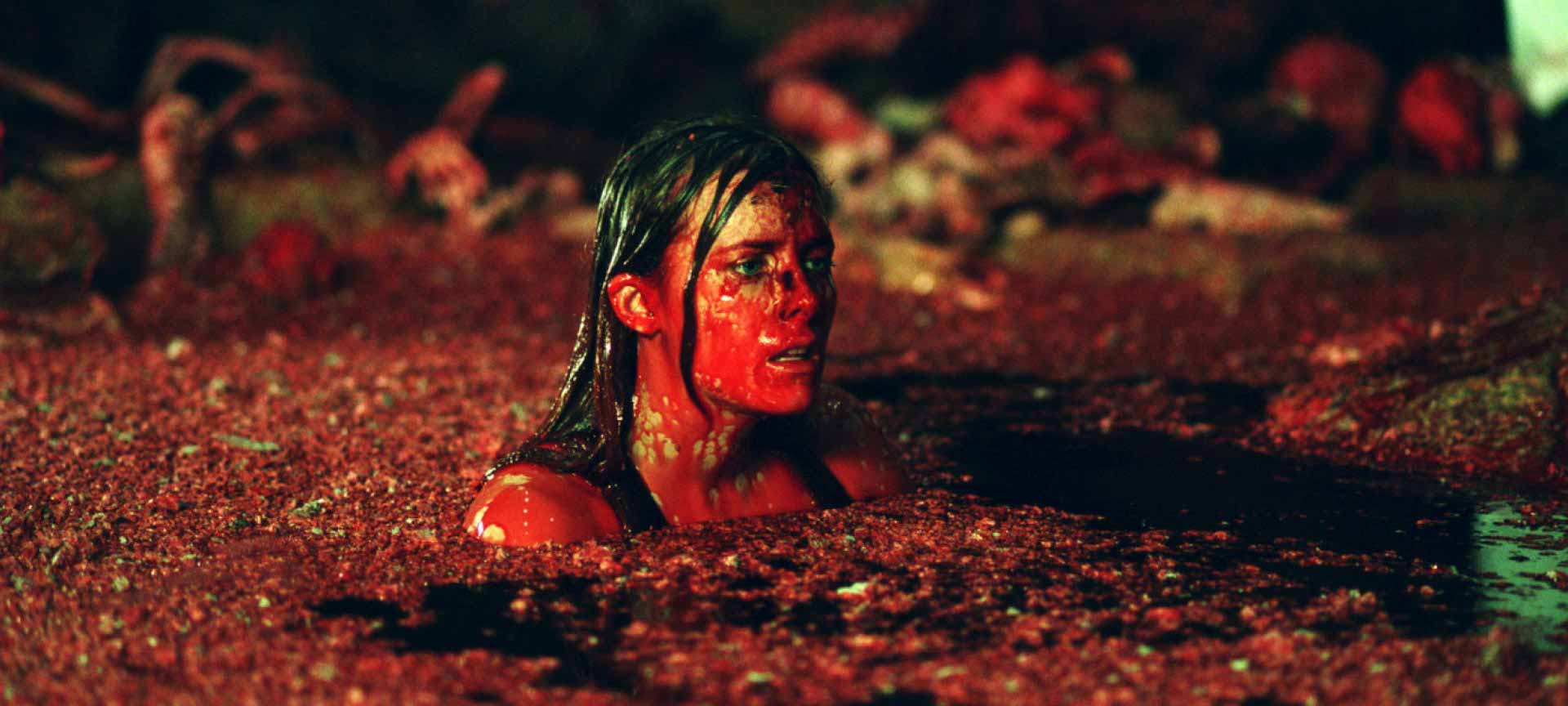
Twenty years ago, writer-director Neil Marshall set out to create a distinct horror film. After his first feature, Dog Soldiers (2002), about a special ops team and a zoologist hunting werewolves, succeeded, Marshall grew wary of being typecast as a horror director. But after seeing the unique direction of his next project, he agreed to make The Descent (2005).
The film features an all-female cast, a decision Neil Marshall made after discussing the lack of all-female casts in horror films with his business partner. Moving away from the non-emotional macho characters of his first film. The Descent delves into the complexities of friendships and the unexpected betrayals that can arise in times of crisis.
When it comes to raising the tension, Marshall drew inspiration from several horror classics, including The Texas Chain Saw Massacre (1974) and The Thing (1982). Films that do an exceptional job at slow-burn suspense in a contained setting. While The Descent was in pre-production, another underground horror film, The Cave (2005), had already been in production for six months. Now in competition with another creature feature set in a cave system, the filmmakers of The Descent decided to fast-track the film for release before the Cave in 2005.
Despite the rushed production, The Descent exceeded expectations during its opening weekend. Audiences and critics alike were drawn to its intense atmosphere, claustrophobic tension, and inventive approach to the horror genre.
First Layer: The story begins by introducing three women: Sarah, our heroine; Beth, her best friend; and Juno, Sarah’s foil. This opening quietly foreshadows a devastating turning point for Sarah and Beth. When Beth catches the charged look between Juno and Sarah’s husband, dread flickers in the air before the moment slips away. Then, as Sarah and her family return to their hotel, a violent crash shatters their world, killing her husband and young daughter.
A year later, Juno leads Sarah, Beth, sisters Rebecca and Sam, and newcomer Holly on a caving trip in the Appalachian Mountains. Juno, determined and anxious, longs for the adventure to help Sarah break free from her grief and reclaim the boldness she once had. The group, eager yet uneasy, trusts they are exploring a well-mapped cave system.

Second Layer: Now inside the deep, musty cave, panic sets in as things go wrong. The group worms deeper into darkness, led by Juno, before a tunnel collapses, trapping them all in silence. Juno, her voice shaky, admits she led them into an uncharted system, driven by her need for a unique discovery. Shock turns to anger among the group as they realize they’re lost.
The group’s cohesion weakens as they search for an exit. Discovering cave paintings and climbing gear, hinting at the presence of prior humans. When Sarah investigates a mysterious noise, Juno challenges Beth with, “We all lost something in that crash.” The remark unsettles Beth, who becomes unsure of Juno’s intentions.
Meanwhile, Holly believes she is seeing sunlight and runs down a cavern, but the false sunlight leads Holly to fall and, unfortunately, break her leg. The chaos of Holly’s injury leads the rest of the women to be ambushed by blind, pale, sound-hunting “crawlers”.
Holly is taken by these crawlers, and the other women run, except for Juno, who is frantically trying to keep Holly away from the creatures. During a panicked struggle, Juno accidentally strikes Beth with a climbing pick, mortally wounding her. Juno then abandons Beth, leaving her to die, but not before Beth takes Juno’s necklace from her.

Final Layer: One by one, the women are hunted down. Rebecca and Sam are killed by crawlers, leaving only Sarah and Juno alive. Sarah, now in a hardened survival state, finds Beth still barely alive and suffering. Beth lets Sarah know who exactly caused her injustice, and gives her Juno’s pendant, engraved with a message revealing that Juno had an affair with Sarah’s late husband.
Enraged, Sarah unleashes her survival instinct, killing crawlers in a blood-soaked frenzy. She reunites with Juno and silently reveals the pendant. Surrounded by crawlers and now with an escape plan, Sarah lets her rage take her over, and she wounds Juno in such a way that she wouldn’t die without having to fight. In an interview with Screen Anarchy after the film’s release, director Neil Marshall had this to say about Sarah, “She had to become as primal, and as savage as the crawlers, and I loved that idea”.
Two Endings: In the US release ending, Sarah escapes to daylight and flees in terror, managing to make her way back to the car and escape. She then sees a hallucination of Juno in the passenger seat, and then a cut to the credits.
The UK ending continues after the hallucination, with Sarah still trapped underground. She sits before a flickering torch, imagining her daughter’s birthday cake as creature screams echo. The camera pulls back, sealing her fate.
Director Neil Marshall went on to say that his inspiration for Texas Chainsaw Massacre (1974) drew upon the multiple endings, saying, “Just because she gets away, does that make it a happy ending?” After its US release, the film received mixed reviews from audiences regarding the conclusion. Leaving Marshall able to release the alternate ending for the European audience.
The title “The Descent” carries multiple meanings, both physical and psychological, as well as moral. The cave is not only a literal setting but also a visceral symbol of the women’s internal conflicts. Its darkness mirrors their emotional turmoil, while its shifting, collapsing passages reflect the unstable and dangerous landscape of their minds.

Moving from the broader theme of descent, Sarah’s journey gives the concept its most personal shape. Sarah doesn’t just survive the cave; she changes in it. The deeper she goes, the more her grief becomes aggression, clarity, and rage. In contrast to Juno, whose determination often masks guilt and denial, Sarah’s final confrontation with her isn’t simply about survival; it’s about reclaiming her identity and facing the truth that has crushed her since before the caving trip. By the time she leaves Juno to die, Sarah has embraced a primal self, one who can live in darkness and wield it as a weapon. Whether she escapes or not, the person who entered the cave never returns.
In contrast to Sarah’s transformation, Juno’s story reveals another facet of the cave’s symbolism. Her constant need to push forward, to keep moving, to conquer the unknown cave, is a desperate attempt to outrun her own conscience, unlike her companions, who hesitate or confront their fears directly. But the cave traps her with it. Her frantic attempts to “fix things” only make them worse. Her final moments have her cornered, abandoned, hunted, embodying the collapse of a person who could not face her own truth, in contrast to those who accepted theirs.
Beth, meanwhile, serves as a different kind of anchor for the group. Where Sarah and Juno confront their truths in extreme ways, Beth acts as the film’s moral compass. She notices what others overlook, seeing through Juno’s façade and understanding the emotional undercurrents that hold the group together or threaten to tear it apart. Her “suspicious eye” isn’t paranoia; it’s clarity. Beth sees the descent coming before anyone else.
In the end, Neil Marshall’s The Descent distinguishes itself not merely through creature design or visceral thrills, but through the interplay of emotional and psychological layers that permeate the narrative. The film’s focus on inner conflict serves its central theme: by rooting horror in grief, guilt, and fractured friendship, Marshall ensures the story resonates beyond its immediate scares. This is a rare instance of a creature feature that unsettles not only due to unseen predators, but also due to the personal burdens the characters confront. The Descent demonstrates that horror’s truest form emerges from confronting our most unsettling truths.
Like what you’re reading? Subscribe to never miss a story.
References:
Guillen, Michael. “THE DESCENT—Interview with Neil Marshall.” ScreenAnarchy, 23 July 2006, screenanarchy.com/2006/07/the-descentinterview-with-neil-marshall.html.
Kung, Michelle, and Vanessa Juarez. “The Original Ending of “the Descent” You Won’t See in Theaters.” EW.com, 28 July 2006, web.archive.org/web/20221010194333/ew.com/article/2006/07/28/original-ending-descent-you-wont-see-theaters/. Accessed 14 Nov. 2025.
Leave a Reply