
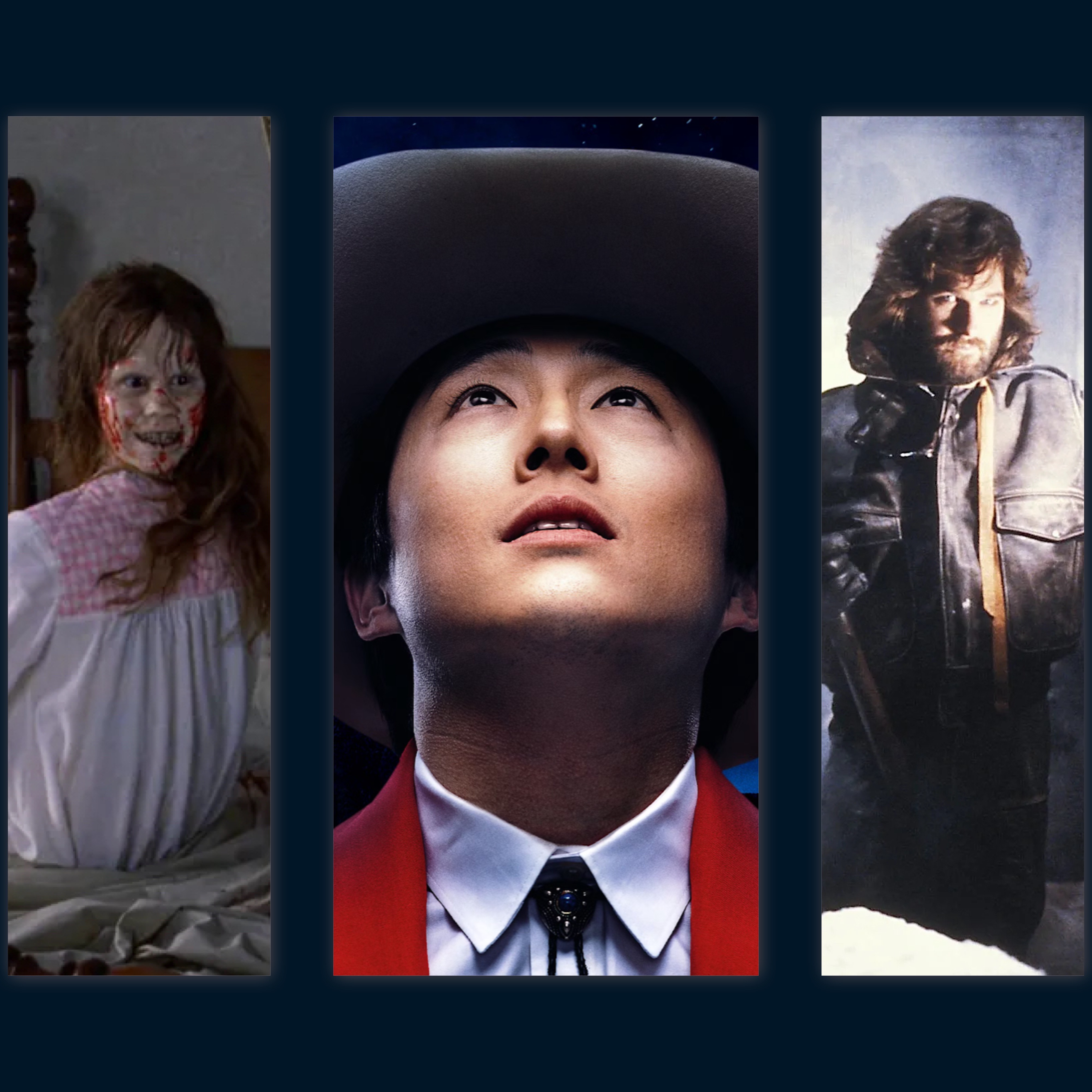
Horror cinema has long incorporated elements from various film genres, including comedy, drama, and romance, to craft stories that explore and intensify collective fears. As the genre has grown to appeal to a broad and diverse audience, the rise of distinct subgenres has provided a clearer way to categorize the different types of fear and unease each film aims to evoke.
Within the horror genre, films are most effectively analyzed through three principal subgenres, supernatural horror, creature features, and psychological horror, each distinguished by the specific sources and mechanisms of fear they employ.
To start, the first widely recognized horror film is the 1896 French short film, “Le Manoir du Diable”. Although its 3-minute runtime is filled with whimsical theater imagery of that era, it introduces the supernatural subgenre’s common theme: the afterlife.
Supernatural films can be frightening to some, yet the continuous themes of radical religious beliefs can bring the viewer out of reality. Religion, predominantly the Christian faith, is a pervasive theme throughout these movies. They utilize demons, priests, exorcisms, and ghosts to convey a message from a higher power, warding off evil.
One of the most well-known works is William Friedkin’s 1973 film The Exorcist. It follows twelve-year-old Regan, who is possessed by a demon that speaks in a disembodied voice and grows increasingly ghastly by the minute. After invasive medical procedures and a psychiatrist visit, it takes Father Karras’ rejuvenation in his faith to conquer the demon possessing Regan, to which he subsequently sacrifices himself in a spiritual suicide. Before the father can let out a final death rattle, he is begrudgingly forced to repent for his personal and religious guilt.
With the film’s release came outlandish stories about moviegoers leaving early, becoming distressed, and physically ill. An article published in the History of the Human Sciences stated, “Warner Bros. were delighted by the stories of religious outrage, as they correlated the news coverage with boosted sales, with internal memos remarking that the best thing that could happen would be a public condemnation from the Pope.” (Chambers). The more media coverage and backlash The Exorcist received contributed to the film’s record-breaking box office, despite a ban in some areas of the United Kingdom due to concerns about demonic possession.
Supernatural horror, preying on the fears of the Christian masses to create hysteria, is not uncommon. Several years after The Exorcist established itself in popular culture, came Stuart Rosenberg’s 1979 film “Based on a True Story”, The Amityville Horror. The story of a house possessed followed a similar structure; The Lutz family moves into a new home where a familicide occurred the year before. George, the patriarch of the family, succumbs to the malevolent force while his Catholic wife invites a priest in to bless their home. Father Delaney attempts to persuade his fellow priests to help him and the Lutzes, only to find that his pleas are ignored. Resembling Father Karras in The Exorcist, George Lutz and Father Delaney undergo an epiphany of faith that brings them a sense of peace. Supernatural horror often creates a spectacle, generating wavering support and a mountain of controversy, which can detract from the overall horror of the film.
Secondly, creature features are a midpoint subgenre that delivers on frights and general anxieties. Monster movies have evolved from giant literal monsters like The Golem (1914), King Kong (1933), and Godzilla (1954) to modern body horror and the unnerving unseen creature. Body horror and monsters actively collaborate with the viewer’s imagination of what the character is feeling. John Carpenter’s cult classic The Thing (1982) is a compelling example of this, an alien invasion film disguised as a whodunit. After a group of scientists brings in a stray dog, a parasitic extraterrestrial life form that can imitate other organisms, terrorizes them in their remote Antarctic camp. The film does not allow the characters or the audience to get comfortable. The parasite has no proper form, constantly shifting from one life form to another, creating paranoia in complete isolation. The “thing” becomes a side character to the overwhelmingly heavy distrust amongst the group; the question is no longer what the thing is, but rather, who do you trust? Creature features and supernatural films frequently work on opposite spectrums to create realism, forgoing religious morality to make room for logical reasoning.
Contemporary horror has shifted to a more nuanced human-like event to complement the film’s monster. In “Monsters on the Brain: An Evolutionary Epistemology of Horror” by Stephen Asma, he describes this subgenre as follows: “The monster is a beneficial foe, helping us to virtually represent the obstacles that real life will surely send our way.” (Asma 954) He uses this not-so-hidden allegory of a “monster” to show the individual’s true nature. Asma’s writings are closely tied to numerous film examples, such as racism in Candyman (1992), motherhood in Bird Box (2018), and exploitation in Nope (2022).
Bright lights, sudden sounds, and an animal actor turn the filming of a lighthearted sitcom into a bloody tragedy in Jordan Peele’s neo-western Nope. After surviving the grisly affair, a now adult Ricky “Jupe” Park seizes the opportunity to enshrine his life story into a profitable theme park.
Jupe’s storyline throughout the film examines a misuse of opportunism and the simple choice of ignoring consequences. He uses his theme park for an audience to bear witness to the unidentified flying object that has been the main antagonist during the film. Jupe’s conclusion ends on the same note as his beginning, with him mistaking himself as the “chosen one”. This challenges the audience to find the analogy or metaphor, all while being disguised as a monster horror.
Lastly, psychological horror is the leading subgenre when it comes to confronting personal and emotional elements and shining a spotlight on internal battles, phobias, and themes of mental health. Timely taboo topics such as sex and violence in Alfred Hitchcock’s sensation Psycho (1960) influenced horror filmmakers to branch out of the political paranoia of the fifties and move into the slashers of the sixties and seventies.
Bates Motel proprietor Norman Bates is an intense, shy, and troubled young man experiencing mental warfare. Childhood abuse from a religious fanatic for a mother, Norman is groomed to believe that all women live in sin, and he needs protection from them.
While desperately attempting to control his three-way split personality, His uninhibited mental state drives his decisions and the story. In an almost childlike state, Norman does not understand his actions when “mother” takes over, leaving the audience questioning whether Norman is “good.” The setting itself plays a key role in the psychological style, a solitary house standing alone on a hilltop overlooking the secluded motel. Fear is a powerful emotion; Norman experiences a multitude of instinctual and instilled feelings. We, as the viewer, regard his unusual ways in the same way he regards other characters, by seeing them as a threat. There are thousands of possible phobias and anxieties that have and will continue to be explored within the psychological subgenre of horror. Psycho’s immense impact paved the way for previously unspoken topics to be discussed on film.
If the purpose of a horror film is to shed light on the individual viewer’s apprehensions and perspectives, then the subgenres of horror can undoubtedly boost the concerns. Monster and psychological films operate on the same basis of the human condition, a concept that supernatural films can also explore, but only sometimes fully connect with the public. Horror films allow creativity to take center stage in a way that few other genres can. They enable the filmmaker to weave personal stories in without the lesson taking a backseat to character motivations.
Works Cited
Asma, Stephen T. “Monsters on the Brain : An Evolutionary Epistemology of Horror.” Social Research, vol. 81, no. 2, Dec. 2014, pp.941-68 EBSCOhost, https://eds.p.ebscohost.com/eds/detail/detail?vid=2&sid=603c9588-1279-4737-8611-ff3802a7113c%40redis&bdata=JnNpdGU9ZWRzLWxpdmU%3d#AN=edsjsr.26549660&db=edsjsr
Chambers, Amy C. “‘Somewhere between science and superstition’: Religious outrage, horrific science, and the exorcist (1973).” History of the Human Sciences, vol. 34, no. 5, 2021, pp. 32–52. https://doi.org/10.1177/09526951211004465
Leave a Reply